






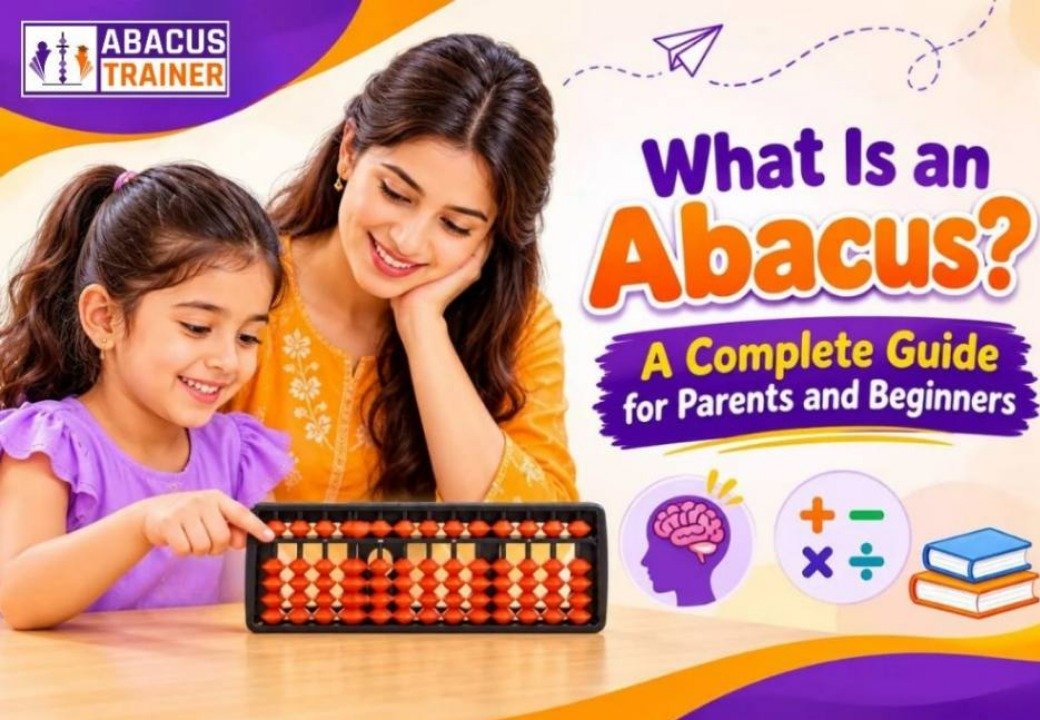
What Is an Abacus? A Simple Guide for Parents and Beginners
Maths is an important part of every child's education. But some children find maths difficult. They may struggle to understand numbers, remember calculations, or solve maths problems quickly. As a parent, you may want to find an easy and fun way to help your child learn maths without feeling stressed. An abacus is a simple tool that can help. People have used it for counting and calculations for many years. Today, it is also used to help children understand numbers, practise maths, and become more confident. But what is an abacus? How does it work? And how can it help children learn maths? In this guide, we will explain everything you need to know about an abacus, including its meaning, uses, benefits, and how it helps children learn maths.
What Is an Abacus?
An abacus is a counting tool made of beads placed on rods or wires inside a frame. By moving the beads, people can show numbers and solve maths problems.
It is one of the oldest tools used for counting and calculations. Even today, many teachers and parents use it to help children learn basic maths in an easy and practical way.
Unlike learning only from books, an abacus allows children to see and touch numbers. They can move the beads, count them, and understand how numbers work.
For example: If a child wants to count up to five, they can move five beads on the abacus. This helps them understand the connection between numbers and the number of objects.
An abacus is especially helpful for children aged 5–15 because they are learning important maths skills during these years.
What Is the Definition of an Abacus?
The definition of an abacus is simple: an abacus is a counting tool with beads that move along rods or wires to show numbers and solve calculations.
In simple words, an abacus helps people count, add, subtract, multiply, and divide using beads.
Children can use an abacus to learn:
- Counting numbers
- Understanding place value
- Addition and subtraction
- Multiplication and division
- Recognising number patterns
- Solving calculations mentally
An abacus makes maths easier to understand because children can work with real beads instead of only looking at numbers written on paper.
What Is the Meaning of Abacus?
The meaning of abacus is connected to counting and solving calculations. It is a tool that helps people work with numbers by moving beads on a frame.
The abacus has been used in different parts of the world for hundreds of years.
Today, it is not just used for counting. Many learning programmes also use it to help children improve their number skills and practise mental maths.
When children learn with an abacus, they understand numbers step by step. With regular practice, some children also learn to imagine the abacus in their minds and solve calculations without using the actual tool.
This is called mental abacus calculation.
What Is an Abacus in Maths?
If you want to know what an abacus is in maths, it is a learning tool that helps children understand numbers and solve maths problems using beads.
Children can use an abacus to learn how numbers are made and how different calculations work.
For example, let's solve 3 + 2 = 5.
A child can follow these simple steps:
- Move three beads to show the number 3.
- Move two more beads to add 2.
- Count all the beads to get the answer 5.
This helps children understand addition instead of only memorising the answer.
The same method can be used for subtraction.
For example, a child can show the number 7 and move two beads back. The remaining beads show the answer: 7 − 2 = 5.
As children improve, they can start learning more difficult calculations, including multiplication and division.
What Is Abacus Math?
Abacus math is a way of learning maths with the help of an abacus.
Children usually start by learning how to count and recognise numbers. After they understand the basics, they move on to addition, subtraction, multiplication, and division.
Many abacus courses also teach mental maths. Children practise imagining the beads moving in their minds and solving calculations without touching the actual abacus.
Abacus math can make learning more interesting because children learn through activities instead of depending only on written exercises.
However, children should continue learning school maths and practising different types of problems. Abacus training is an extra learning tool, not a replacement for regular maths lessons.
How Does an Abacus Work?
An abacus works by using beads to show numbers. The position of each bead tells us its value.
There are different types of abacuses. One common type used for mental maths training is the soroban, which is a Japanese abacus.
It usually has rods separated by a horizontal bar. Each rod represents a place value, such as ones, tens, hundreds, and thousands.
Here is how children can start learning with an abacus.
1. Learning to Count
Children begin by moving the beads and counting them one by one.
This helps them recognise numbers and understand how numbers represent different quantities.
2. Understanding Place Value
Place value means understanding the value of a digit based on where it appears in a number.
For example, in the number 25:
- 2 means two tens, which equals 20.
- 5 means five ones, which equals 5.
An abacus helps children see the difference between tens and ones.
3. Learning Addition and Subtraction
After learning to count, children practise moving beads forward or backward to solve simple calculations.
With regular practice, they can slowly move on to bigger numbers and more difficult sums.
4. Learning Mental Maths
Once children understand how the beads move, some abacus courses teach them to imagine an abacus in their minds.
They practise picturing the beads moving while solving calculations.
This skill takes time to develop and requires regular practice.
Benefits of Learning Abacus for Children Aged 5–15
Learning with an abacus can help children practise maths in several ways. However, the results depend on each child's interest, practice, teaching method, and learning needs.
1. Helps Children Understand Numbers
Some young children find it difficult to understand numbers when they only see them written on paper.
An abacus lets children see and touch numbers. By moving beads, they can understand counting, number combinations, and basic calculations more easily.
2. Helps Children Practise Calculations
Abacus practice gives children more opportunities to solve addition, subtraction, multiplication, and division problems.
As they practise regularly, they may become faster and more comfortable with calculations.
3. Encourages Better Focus
When using an abacus, children need to pay attention to the position of the beads and follow each step carefully.
Regular practice can help them learn to concentrate on a task. However, every child is different, so improvements in focus may vary.
4. Supports Memory Skills
While learning with an abacus, children practise remembering number patterns, calculation steps, and bead movements.
Mental abacus exercises also encourage children to remember and imagine the positions of the beads.
These activities can help them practise remembering numbers and calculation steps.
5. Builds Confidence in Maths
Some children feel nervous when they see difficult maths problems.
An abacus allows them to start with small and simple calculations. As they learn, they can slowly move on to more challenging problems.
Solving sums step by step can help children feel more comfortable and confident when learning maths.
6. Makes Learning More Fun
Children often enjoy learning when they can touch, move, and explore things.
An abacus turns maths practice into a hands-on activity. This can make learning more enjoyable, especially for children who find books and worksheets difficult or boring.
7. Teaches Children to Think Step by Step
Using an abacus teaches children to follow a clear process.
They learn to understand the number, move the beads correctly, and check the answer.
This type of practice can help children become more comfortable with solving maths problems step by step.
Remember: An abacus is a learning tool, not a replacement for school maths. Children should also practise word problems, logical thinking, and other important maths topics.
At What Age Should Children Start Learning Abacus?
Many children can start learning basic abacus skills at around 5 or 6 years old. The right age depends on whether the child can recognise numbers, is ready to learn, and shows interest.
Children aged 5–15 can learn abacus skills step by step according to their current abilities.
Here is a simple age-wise guide:
- Ages 6–7: Learn counting, recognise numbers, and practise simple addition and subtraction.
- Ages 8–9: Learn bigger numbers, understand place value, and practise more challenging calculations.
- Ages 10–12: Improve calculation skills, learn more advanced maths operations, and begin mental abacus exercises when ready.
These are only general suggestions. There is no fixed age for every child because children learn at different speeds.
Parents should choose a learning programme that matches their child's skills instead of comparing their child with others.
How Can Parents Help Children Learn Abacus at Home?
Parents can make abacus learning easier by keeping practice simple, regular, and enjoyable.
Here are some useful tips:
- Start with the basics: Teach your child to count and recognise numbers before moving on to difficult calculations.
- Keep practice sessions short: Start with 10–15 minutes a day. Adjust the time according to your child's interest and needs.
- Use everyday examples: Let your child count fruits, toys, pencils, or other objects at home.
- Practise regularly: A little practice every day can help children become more familiar with the abacus.
- Avoid putting pressure on your child: Do not force your child to solve sums quickly. Focus on understanding first.
- Appreciate their efforts: Encourage your child even when they make mistakes. Mistakes are a normal part of learning.
- Choose the right learning materials: Use an abacus suitable for your child's age and follow a simple learning plan.
The main goal is to help children enjoy maths and build a strong understanding of numbers.
How to Choose the Right Abacus Learning Programme
If you want to enrol your child in an abacus class, choose a programme that focuses on understanding, regular practice, and gradual improvement.
Before selecting a course, consider these important points.
- Lessons Suitable for Your Child's Age
The lessons and activities should match your child's age and current maths skills.
- Easy Teaching Methods
Teachers should explain each step clearly and give children enough time to practise and understand.
- Regular Practice Activities
A good programme should include practice exercises that help children remember what they have learned.
- Tracking Your Child's Progress
Parents should be able to see what their child has learned and which skills need more practice.
- A Friendly Learning Environment
Children should feel comfortable asking questions, making mistakes, and learning at their own pace.
- Support for Parents
Learning materials and regular progress updates can help parents support their children's practice at home.
Online abacus classes are also a good option for families who prefer learning from home.
Before joining an online course, check the lessons, teaching methods, practice materials, and whether the programme suits your child's needs.
Common Myths About Abacus Learning
There are several common misunderstandings about abacus learning. Knowing the facts can help parents make the right choice for their children.
Myth 1: An Abacus Is Only for Small Children
Fact: Children of different ages can learn abacus skills. Older children can also use it to practise calculations and improve their number skills.
Myth 2: Abacus Learning Replaces School Maths
Fact: An abacus helps children understand numbers and practise calculations, but it does not replace school maths lessons. Children still need to learn other maths topics and practise solving problems.
Myth 3: Every Child Will Become a Fast Calculator
Fact: Every child learns at a different speed. Regular practice may help improve calculation skills, but the results will not be the same for everyone.
Myth 4: Children Must Practise for Hours
Fact: Children can start with short, regular practice sessions. The practice time can be increased gradually when they feel comfortable and ready.
Frequently Asked Questions (FAQs)
1. What Is an Abacus in Simple Words?
An abacus is a counting tool with beads that move along rods or wires. It helps children understand numbers and practise addition, subtraction, multiplication, and division.
2. What Is the Definition of an Abacus?
An abacus is a counting tool used to show numbers and solve calculations by moving beads on a frame.
3. What Is Abacus Math Used For?
Abacus math helps children recognise numbers, understand place value, and practise different calculations. Some learning programmes also teach children how to solve calculations mentally.
4. Is Abacus Learning Good for Children Aged 5–15?
Abacus learning can be useful for children aged 5–15 because it gives them a hands-on way to practise maths.
It can help children understand basic calculations and build confidence when the lessons are suitable for their age and learning level.
5. Can Children Learn Abacus Online?
Yes, children can learn abacus online through guided lessons and practice activities.
Parents should choose a course that offers clear instructions, suitable exercises, and regular feedback on their child's progress.
6. How Long Does It Take to Learn Abacus?
The time needed depends on the child's age, current skills, practice routine, and course structure.
Children may learn basic counting quickly, but advanced calculations and mental abacus skills take more time and regular practice.
7. What Is the Difference Between an Abacus and a Calculator?
An abacus uses movable beads to show numbers and solve calculations. A calculator is an electronic device that processes calculations and displays the answers.
An abacus can help children understand how numbers work, while a calculator is mainly used to get answers quickly.
Conclusion
An abacus is a simple and useful tool that helps children understand numbers through practical learning.
It allows them to practise counting, addition, subtraction, multiplication, and division in an interesting and interactive way.
Now that you know what an abacus is, you can understand why it is still a popular learning tool for children.
With suitable lessons and regular practice, abacus learning can help children practise calculations, improve their focus, and feel more confident about maths.
For parents of children aged 5–15, the best approach is to make learning fun, start with simple activities, and let children learn at their own speed.
Ready to help your child improve their maths skills?
Visit AbacusTrainer to explore abacus learning resources and discover simple ways to make maths practice more enjoyable for your child.