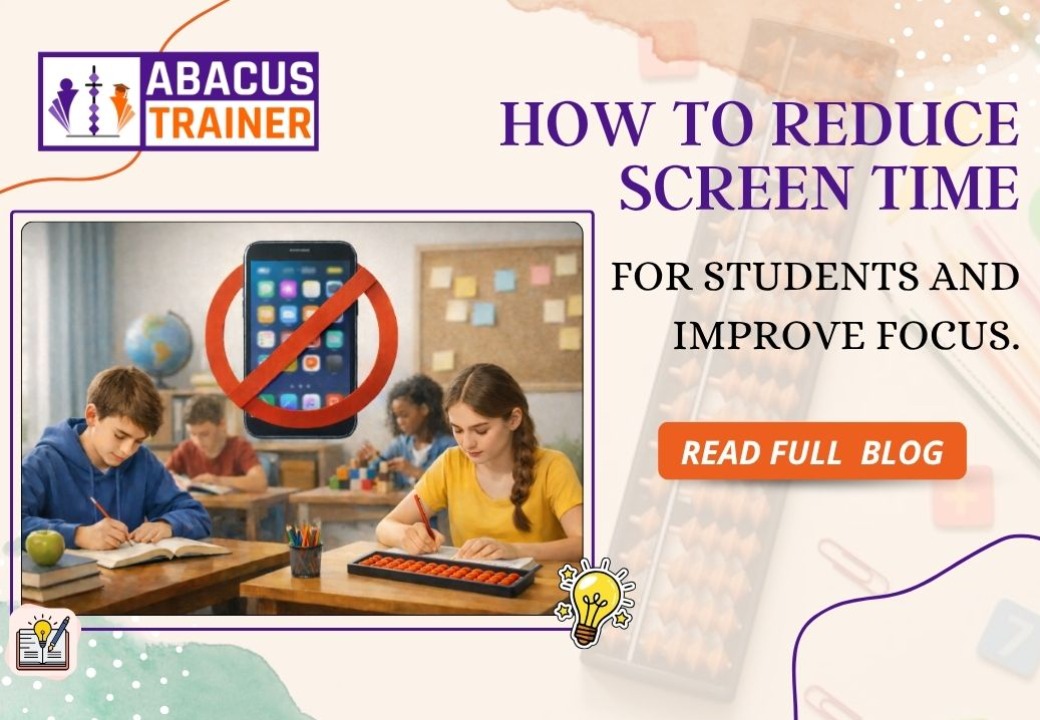
How to Reduce Screen Time for Students
How to Reduce Screen Time for Students: Best Activities to Improve Focus, Memory, and Learning
In today’s digital world, children spend a large amount of time on mobile phones, tablets, televisions, computers, and gaming devices. While technology can be useful for learning, too much screen exposure can affect a child’s concentration, sleep, memory, and overall academic performance. Many parents are now searching for ways to reduce screen time for students and help children focus better.
Screen time refers to the amount of time children spend looking at digital screens such as mobile phones, tablets, televisions, laptops, and gaming devices. Excessive screen time can lead to child concentration problems, poor attention span, low physical activity, irritability, and weak study habits.
One of the biggest concerns among parents is screen addiction in kids. If a child becomes upset when a phone is taken away, avoids outdoor play, struggles to focus on studies, or spends hours watching videos and playing games, it may be time for a digital detox for kids.
Why Too Much Screen Time Is Harmful for Students
Too much screen time can affect children in several ways. Students who spend long hours on phones or tablets may face difficulty concentrating in class, remembering lessons, and completing homework. They may also experience sleep disturbances because screen exposure before bedtime can affect sleep quality.
Children who spend more time on gadgets usually spend less time reading, writing, playing outdoors, or learning new skills. This can reduce creativity, communication skills, and problem-solving ability.
Common effects of excessive screen time include:
- Poor concentration and low attention span
- Less interest in studies
- Weak memory power
- Poor sleep habits
- Mood swings and irritability
- Lack of physical activity
- Reduced social interaction
Best Ways to Reduce Screen Time for Students
The best way to reduce screen time in phone usage is by replacing gadgets with productive and fun activities. Parents can create a daily screen time table that includes study time, outdoor play, family time, reading time, and limited gadget use.
Using a screen time timer can also help. Parents can set fixed limits for mobile phones, TV, and gaming devices. For example, children can be allowed 30 to 60 minutes of screen time after completing homework and other responsibilities.
It is also important to avoid screen usage before bedtime. Instead of using mobile phones at night, encourage children to read books, draw, write stories, or spend time talking with family members.
Activities to Improve Children's Concentration
Parents often look for activities to improve children’s concentration because focus plays an important role in learning. Concentration helps students remember lessons, solve problems faster, and perform better in school.
Some of the best ways to improve children’s concentration include:
- Puzzle games
- Chess
- Sudoku
- Memory games
- Storytelling activities
- Reading books
- Handwriting practice
- Yoga and meditation
- Deep breathing exercises
- Music and dance
These activities keep children mentally active and reduce their dependency on mobile phones.
How the Abacus Helps Reduce Screen Time
Abacus is one of the best screen-free activities for kids because it improves concentration, memory, and calculation skills. Children who learn abacus use both sides of the brain, which helps improve visual memory, logical thinking, and focus.
Abacus classes for kids are especially useful for students who struggle with maths or have difficulty concentrating. Regular abacus practice can help children perform calculations faster and become more confident in school.
Parents who want to reduce screen time for students can replace mobile usage with abacus practice for 20 to 30 minutes every day. This helps children stay engaged in a productive activity while also improving academic skills.
Online abacus classes can also be useful when screen time is limited and focused on learning. Unlike entertainment videos or mobile games, online abacus sessions improve memory, attention span, and faster calculation skills. Students can attend a short online class and then continue practice offline with worksheets, flashcards, beads, and mental maths exercises.
Learning abacus online helps children use screen time in a more meaningful way. It encourages discipline, improves concentration, and gives students a healthy balance between digital learning and offline activities.
Why Vedic Maths Is Good for Children
Vedic maths for children is another excellent way to reduce gadget usage and improve focus. Vedic maths teaches simple tricks and techniques for faster calculations, making maths easier and more interesting for students.
Many children fear maths because they find calculations difficult or time-consuming. Vedic maths helps students solve problems quickly and improves mental maths skills. It also develops logical thinking and confidence.
Students who practice Vedic maths regularly often become faster in addition, subtraction, multiplication, and division. These skills are helpful not only in school exams but also in daily life.
Best Screen-Free Activities for Kids
If parents want to reduce screen addiction in kids, they should encourage more screen-free activities for kids at home.
Some good options include:
These activities improve creativity, concentration, memory, and communication skills.
Conclusion
Reducing screen time for students is important for better focus, memory, learning, and overall child development. Parents can create a healthy routine by limiting gadget use and encouraging productive activities such as reading, puzzles, yoga, abacus, and Vedic maths.
Small changes in daily habits can make a big difference. When children spend less time on screens and more time learning new skills, they become more confident, focused, and successful in school and everyday life.