





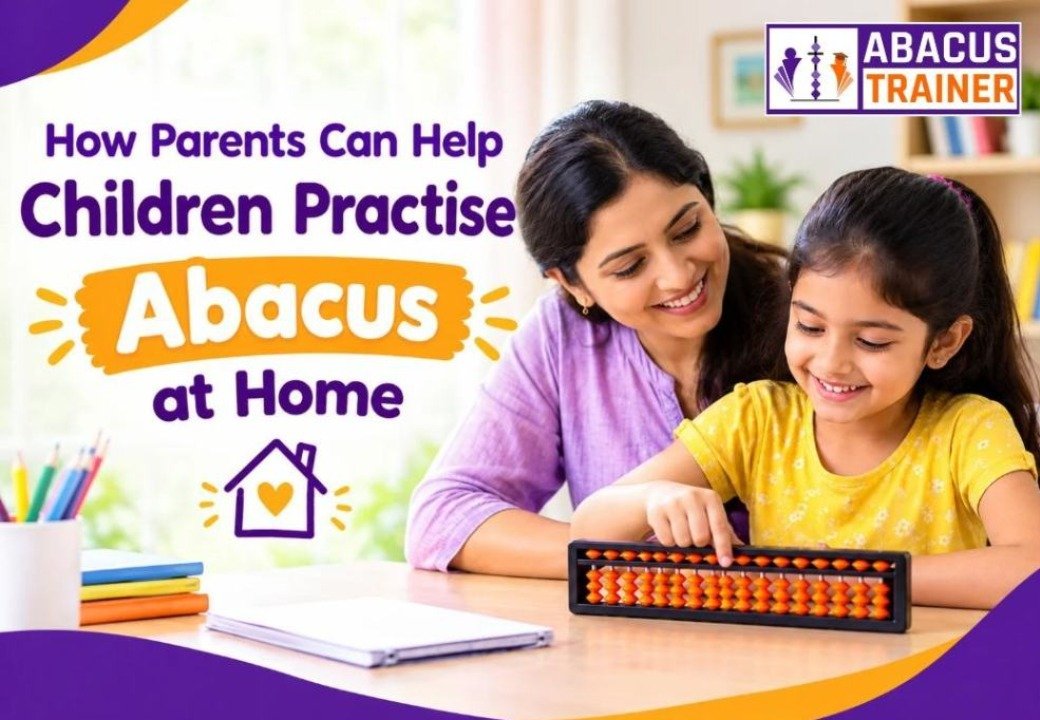
How Parents Can Help Children Practise Abacus at Home
Maths becomes easier when children get regular practice. Abacus is one simple way to help children understand numbers and practise calculations in an interesting way.
Children between 5 and 15 years can benefit from regular abacus practice. They can learn how numbers work, practise calculations, and slowly become more confident with maths.
Practice does not have to happen only during an abacus class. Parents can also create a small practice routine at home. Even 10 to 15 minutes a day can be enough to keep children connected with what they have learned.
Parents also do not need to be maths teachers or abacus experts. Simple support, patience, and encouraging words can make home practice much easier for children.
Why Is Abacus Practice at Home Important?
Learning something once is not always enough. Children need regular practice to remember what they have learned and become comfortable using it.
Home abacus practice gives children an opportunity to revise their classwork in a relaxed environment. It can also help them use numbers more confidently.
Regular practice may help children:
- Improve their calculation skills
- Understand numbers better
- Develop better concentration
- Build confidence in maths
- Improve number memory
- Practise mental calculations
- Feel more comfortable with maths
- Become familiar with different types of calculations
There is no need to make children practise for hours. A short session every day can be more useful than a long practice session once in a while.
How Parents Can Make Abacus Practice Easy at Home
Parents can make home practice simple by creating a routine that fits into the child's daily schedule.
1. Set a Regular Practice Time
Choose a time when your child is comfortable and has fewer distractions.
You can select a time after school, before dinner, or any other time that works well for your family.
Try to follow the same time on most days. A regular schedule can slowly become a habit.
Start with around 10 to 15 minutes. If your child is interested and comfortable, you can increase the practice time gradually.
2. Begin With Familiar Topics
Do not begin every session with difficult questions.
Start with the topics your child already knows. For example, if they have recently learned addition and subtraction, give them a few simple questions from these areas.
Once they are comfortable, introduce slightly harder questions.
This approach helps children practise without feeling that maths is too difficult.
3. Practise With a Physical Abacus
If your child uses a physical abacus, keep it in a place where they can easily access it.
Give them simple calculations and ask them to solve the questions using the beads. This can help them understand how numbers are represented on the abacus.
For example:
- 4 + 3 = ?
- 8 - 2 = ?
- 5 + 4 = ?
- 12 - 6 = ?
As children gain experience, they can slowly start imagining the beads instead of physically moving them.
Fun Abacus Exercises for Kids
Home practice does not always need to look like homework. Parents can turn simple calculations into small games.
Number Recognition Game
Say a number and ask your child to make that number on the abacus.
You can also set a number on the abacus and ask your child to identify it.
This simple activity can help children become more familiar with numbers and bead positions.
Quick Maths Challenge
Prepare five to ten easy questions and ask your child to solve them.
You can make it a small challenge, but do not make speed the main goal.
Correct answers and proper understanding should come first. As children become more comfortable, their calculation speed can improve naturally.
Mental Maths Activity
Once your child is comfortable using the physical abacus, introduce simple mental calculations.
Ask a question and encourage your child to imagine the abacus in their mind.
For example:
8 + 3 - 2 = ?
Instead of physically moving the beads, the child can try to picture the bead movements mentally.
With regular practice, this activity can support mental calculation skills.
Try Different Abacus Activities
Doing the same type of question every day can become boring for children. Changing the activity can make practice more interesting.
Parents can try:
- Number guessing games
- Addition challenges
- Subtraction activities
- Number matching
- Flashcard questions
- Mental maths games
- Simple timed challenges
- Number puzzles
- Quick calculation rounds
You can also allow your child to choose the activity sometimes. Giving children a small choice can make them feel more involved in their learning.
Use Abacus Practice Worksheets
Worksheets are another useful way to give children extra practice.
Depending on the child's level, an abacus worksheet can include addition, subtraction, multiplication, and other basic maths questions.
You can use an Abacus Worksheet to give your child additional practice at home.
Avoid giving a very large worksheet. A small set of questions is often easier for children to complete without feeling tired.
After they finish, check the answers together. If there is a mistake, explain the question calmly instead of simply giving the correct answer.
The aim is to help the child understand the mistake and learn from it.
Keep Abacus Practice Short and Regular
One common problem is making children practise for too long.
Long sessions can make children tired and may reduce their interest in learning. Short and regular sessions are usually easier to manage.
Here is one simple weekly plan:
- Monday: Addition practice
- Tuesday: Subtraction practice
- Wednesday: Number games
- Thursday: Mental maths
- Friday: Worksheet practice
- Saturday: Fun abacus activity
- Sunday: Revision or break
You do not have to follow this exact routine. Parents can change the activities according to the child's learning level and daily schedule.
Make Daily Abacus Practice Fun
Children are more likely to practise when the activity feels enjoyable.
Parents can add small games, challenges, and rewards to make the routine more interesting.
For example, you can:
- Give a star after completing practice
- Set a small weekly target
- Let the child select a game
- Praise their improvement
- Celebrate their effort
- Create a family maths game
- Allow siblings to practise together
The reward does not have to be something expensive. A simple word of appreciation can also make a child feel happy about their progress.
Try not to compare your child with other children. Every child learns at a different pace.
The goal should be steady improvement rather than competition.
Do Not Make Speed the Only Goal
Abacus practice can help children become faster at calculations, but speed should not be the first priority.
Children should first understand how the calculation works. Once they are comfortable with the method, speed can improve with practice.
If your child makes mistakes, do not get angry. Go back to an easier question and give them another chance.
You can use simple encouraging words such as:
- "Good effort!"
- "Let's try it once more."
- "You are improving."
- "Take your time."
- "Well done!"
- "You can do it."
Positive support can make children feel more comfortable while learning.
How Much Should Children Practise?
There is no single practice time that works for every child.
The right amount depends on the child's age, learning level, attention span, and comfort with the activity.
For many children, starting with 10 to 20 minutes a day can be a practical option.
You can divide the session into small parts:
- 5 minutes: Revise an old topic
- 5-10 minutes: Solve calculation questions
- 5 minutes: Play a maths game or do a fun activity
The important thing is to practise regularly.
A short session several times a week can be easier for a child to follow than one long session once a week.
Common Mistakes Parents Should Avoid
Parents want their children to improve, but too much pressure can make learning difficult.
Try to avoid:
- Making children practise for a very long time
- Giving too many questions at once
- Comparing children with friends or siblings
- Getting angry over mistakes
- Focusing only on calculation speed
- Making every session feel like schoolwork
- Forcing a child to continue when they are very tired
Instead, create a calm space where children can ask questions, make mistakes, and try again.
Learning becomes easier when children are not afraid of making mistakes.
Benefits of Regular Abacus Practice for Kids
Regular practice can help children build several useful maths-related skills over time.
Better Concentration
While working with an abacus, children need to focus on numbers and bead movements. Regular activities can help them stay focused on a particular task.
Improved Calculation Skills
Practising basic operations regularly can help children become more comfortable with addition, subtraction, multiplication, and other calculations they learn at their level.
Greater Confidence
When children solve questions correctly, they can feel more confident about their ability to work with numbers.
Small improvements can encourage them to take on slightly harder questions.
Support for Mental Maths
With continued practice, children can learn to picture the abacus in their mind.
This can help them work towards solving calculations mentally without always needing a physical abacus.
Online Abacus Learning Can Support Home Practice
Home practice can also be combined with structured online learning.
If your child prefers learning from home, you can explore Online Abacus Classes for Students and use regular practice activities along with their lessons.
A structured class can introduce concepts, while short practice sessions at home can help children revise and use those concepts.
Simple Tips for Parents
Keep these points in mind while helping your child practise:
- Select a regular practice time.
- Keep each session short.
- Begin with simple questions.
- Increase the difficulty slowly.
- Use different activities.
- Include games whenever possible.
- Praise effort instead of only correct answers.
- Give children small breaks.
- Avoid comparing them with others.
- Keep the learning environment positive.
- Let your child ask questions.
- Give them enough time to understand a new concept.
Parents also do not have to sit beside their child for the whole practice session.
You can prepare the activity, check the work afterward, and provide help when needed. This can also encourage children to become more independent learners.
FAQs About Abacus Practice at Home
1. How long should children practise abacus at home?
Children can begin with around 10 to 15 minutes of practice each day. The duration can be changed based on their age, attention span, and learning level.
2. Can parents help with abacus practice without knowing abacus?
Yes. Parents do not have to be abacus experts. They can support the child by creating a simple routine, giving easy questions, using worksheets, and encouraging regular practice.
3. What are some good abacus exercises for kids?
Simple addition, subtraction, number recognition, mental calculation activities, number games, flashcards, and worksheets can be used for practice.
4. Do children need to practise abacus every day?
Regular practice can help children remember what they have learned. Even a short session on most days can be useful. The exact routine can depend on the child's schedule and learning needs.
5. Can abacus practice help with mental maths?
Regular abacus practice can support calculation skills and help children learn to visualise numbers. With continued learning, they can practise solving calculations mentally.
6. Can a child practise abacus without using a physical abacus?
Yes. Once children become familiar with the method, they can practise visualising the abacus and solving calculations mentally. However, beginners may find a physical abacus useful while learning the basics.
7. Are abacus worksheets helpful for children?
Yes. Worksheets provide additional questions that children can use to revise topics they have already learned. Parents should select worksheets that match the child's learning level.
Conclusion
Abacus practice at home does not have to be difficult or time-consuming.
For children aged 5 to 15, short and regular practice can make maths activities easier to manage. Parents can help by creating a simple routine, using different games and activities, giving suitable worksheets, and encouraging children when they make progress.
The most important thing is to make practice comfortable and consistent. Children should have enough time to understand the concept, make mistakes, and try again.
With regular support and practice, children can gradually become more comfortable with numbers, improve their calculation skills, strengthen concentration, and build confidence in maths.
Start Your Child's Abacus Learning Journey
Looking for simple ways to support your child's maths learning?
Explore Abacus Trainer for resources and learning options designed to make abacus learning easier and more engaging for children.
Start with small practice sessions, keep learning enjoyable, and help your child build a strong foundation in maths step by step.