





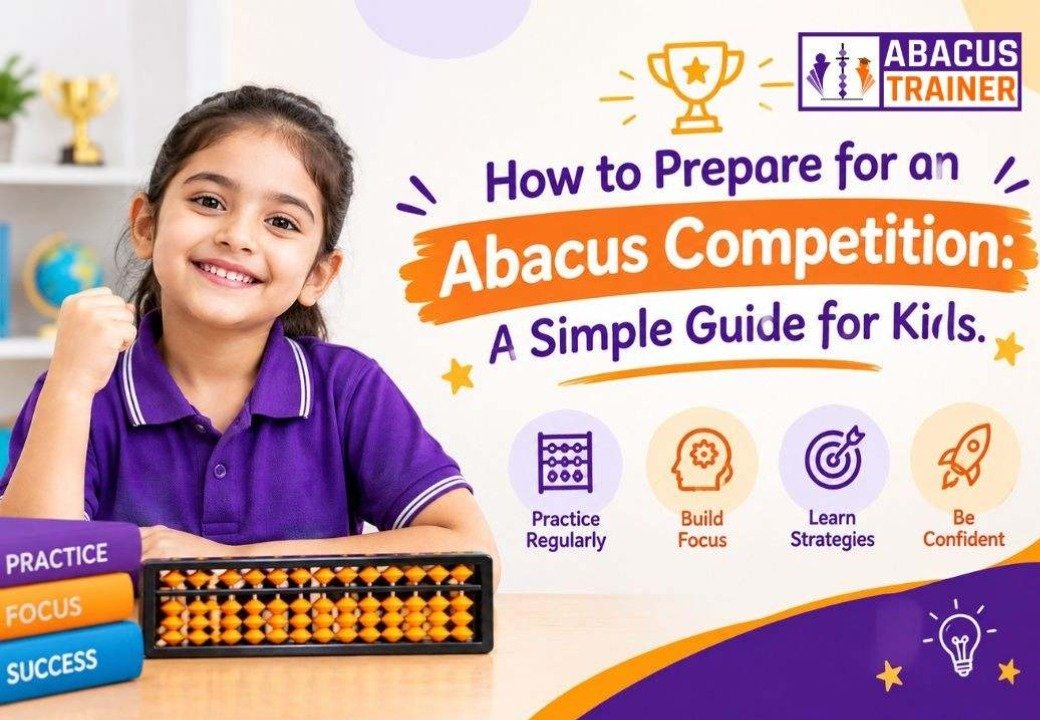
How to Prepare for an Abacus Competition: A Simple Guide for Kids
Taking part in an abacus competition can be an exciting experience for children. It helps them improve their calculation skills, work faster, stay focused, and feel more confident when solving questions within a limited time. For parents, one common question is:
How can I prepare my child for an abacus competition without putting too much pressure on them?
The good news is that competition preparation does not need to be stressful. With regular practice, simple techniques, and positive support, children can improve their abacus skills and feel more comfortable during the competition.
For children between 5 and 15 years old, the goal should not only be to win. The main goal should be to improve calculation skills, accuracy, concentration, confidence, and the ability to stay calm under pressure.
In this guide, we will share simple and useful ways to prepare your child for an abacus competition.
Why Is Abacus Competition Preparation Important?
An abacus competition is different from normal classroom practice. In a competition, children may need to answer many questions quickly and correctly within a fixed amount of time.
That is why it is important to start abacus competition preparation early.
Regular practice can help children:
- Calculate faster
- Make fewer mistakes
- Improve concentration
- Get comfortable with time limits
- Improve mental calculation
- Build confidence
- Stay calm during the competition
- Understand which areas need more practice
When children practise regularly, they become familiar with different types of questions. This can also help them feel less nervous on competition day.
How to Prepare for an Abacus Competition
1. Start With the Basics
Before trying to improve speed, make sure your child understands the basics properly.
Your child should be comfortable using the abacus and solving the calculations they have already learned. If the basic steps are not clear, trying to work faster can lead to more mistakes.
Start with easy calculations and slowly move to more difficult questions.
Do not rush your child just to make them faster.
First focus on accuracy. Then work on speed.
Once your child can answer questions correctly, you can slowly help them improve their speed.
2. Create a Simple Daily Practice Routine
One of the best abacus competition tips is to practise regularly instead of doing long practice sessions only a few days before the competition.
For young children, short and focused practice sessions are usually easier to follow.
A simple daily routine can include:
- 10–15 minutes: Basic calculation practice
- 10 minutes: Speed practice
- 5–10 minutes: Mental calculation
- A few minutes: Review mistakes
The practice time can be changed based on your child's age, skill level, and comfort.
The most important thing is to practise regularly.
Even a small amount of practice every day can make a big difference over time.
3. Focus on Accuracy Before Speed
Many parents think abacus competition preparation is only about calculating quickly.
But being fast is useful only when the answers are correct.
During abacus competition practice, first encourage your child to focus on getting the correct answer.
Once they become more accurate, slowly add timed practice.
For example:
Step 1: Solve 10 questions correctly.
Step 2: Try to solve the same type of questions a little faster.
Step 3: Add a time limit.
Step 4: Slowly increase the number of questions.
This simple method can help children improve without making them feel stressed.
4. Practise With a Timer
Time management is an important part of competition preparation.
Once your child is comfortable with the calculations, start using a timer during practice.
Timed practice helps children understand how quickly they can solve questions and where they may be losing time.
However, the timer should be used as a practice tool, not as a way to pressure your child.
Instead of saying:
"You must finish this before the time ends."
You can say:
"Let's see how many questions you can solve today. Tomorrow, we can try again."
This keeps practice fun and positive.
Try Different Practice Sets
Do not use exactly the same questions every day.
Give your child different sets of questions so they can practise with different numbers and calculation patterns.
This makes abacus practice for kids more interesting and helps children become comfortable with different types of calculations.
5. Practise Mental Calculation
Abacus learning can also help children improve their mental calculation skills.
As children become familiar with using the abacus, they may slowly learn to imagine the abacus in their mind while calculating.
Mental calculation practice can help improve:
- Concentration
- Number understanding
- Calculation speed
- Memory
- Confidence with numbers
Add a few mental calculation questions to the daily routine.
Make sure the questions are suitable for your child's current skill level.
Also, avoid comparing your child's speed with other children. Every child learns at their own pace.
6. Learn From Mistakes
Making mistakes is a normal part of learning.
Instead of simply telling your child that an answer is wrong, try to understand why the mistake happened.
You can ask simple questions such as:
- Did you read the question correctly?
- Did you make a calculation mistake?
- Did you lose focus?
- Did you try to solve it too quickly?
- Was the question difficult?
Keeping a small mistake list can also help.
If your child keeps making the same type of mistake, spend a little extra time practising that topic.
This makes abacus practice techniques more useful because your child is practising the areas they actually need to improve.
7. Practise Like a Real Competition
As the competition gets closer, try to make some practice sessions feel like the real competition.
For example:
- Sit in a proper study area.
- Keep all required materials ready.
- Set a timer.
- Give your child a fixed number of questions.
- Do not help while they are solving.
- Check the answers after the practice.
- Talk about mistakes calmly.
This type of abacus competition training helps children become familiar with the competition environment.
It can also reduce nervousness because they already know what timed practice feels like.
8. Take Short Breaks
Children between 5 and 15 years old need regular breaks while learning.
Long practice sessions can make children tired and reduce their concentration.
If your child looks tired, frustrated, or bored, take a short break.
During the break, your child can:
- Drink some water
- Walk around
- Stretch
- Talk about something fun
- Relax for a few minutes
After the break, they can return to practice with a fresh mind.
Remember, abacus competition preparation should help children improve. It should not make them feel exhausted.
9. Build Confidence With Encouragement
Confidence is very important during a competition.
Sometimes children may think:
"I am too slow."
or
"I will make mistakes."
Parents can help by focusing on improvement instead of only focusing on the final result.
Instead of saying:
"You have to win."
Try saying:
"Just do your best and enjoy the experience."
You can also appreciate small improvements, such as:
- "You solved these questions more accurately today."
- "Your speed has improved."
- "You stayed focused for longer today."
- "You corrected your mistakes."
Small words of encouragement can help children develop a positive attitude towards competitions.
10. Avoid Last-Minute Pressure
One of the most important tips on how to prepare for abacus contest is to avoid heavy practice just before the competition.
The day before the competition should not become a full-day study session.
Instead, keep the practice light.
Your child can:
- Revise familiar questions
- Do a short calculation practice
- Review important techniques
- Relax afterward
A good night's sleep, healthy food, and a calm mind are also important.
Try to make competition day feel exciting and positive instead of scary.
Global Abacus Champions 2026
Global Abacus Champions 2026 is a global online abacus competition where children from different parts of the world can showcase their calculation speed, accuracy, concentration, and skills.
It gives children an opportunity to compete at a global level, gain recognition, and become part of the Global Abacus Champions.
Every participant will receive a certificate and medal.
A Simple Weekly Abacus Practice Plan
Parents can follow a simple weekly routine to make preparation easier and more organised.
Monday to Wednesday
Focus on regular calculations and accuracy.
Thursday
Add a short timed practice session.
Friday
Practise mental calculations and review mistakes.
Saturday
Take a complete timed practice test.
Sunday
Keep practice light or take a break.
You can change this routine based on your child's level and daily schedule.
The main goal is to create a routine that your child can follow comfortably.
Common Mistakes Parents Should Avoid
While helping children prepare for an abacus competition, parents should avoid a few common mistakes.
Comparing Children
Every child learns at a different speed.
Comparing your child with friends or classmates can reduce their confidence.
Instead, compare your child's current performance with their own previous performance.
Focusing Only on Winning
Winning is great, but a competition is also a learning experience.
Improving skills, gaining confidence, and enjoying the experience are just as important.
Too Much Practice
More practice does not always mean better results.
Children also need enough time for rest, play, and other activities.
Getting Angry About Mistakes
Mistakes are part of learning.
They help children understand what they need to improve.
Stay patient and supportive when your child makes mistakes.
Starting Too Late
Starting preparation at the last minute can create unnecessary stress.
Begin with small and regular practice sessions early.
Frequently Asked Questions (FAQs)
1. How to prepare for an abacus competition?
To prepare for an abacus competition, children should practise regularly, focus on accuracy first, improve calculation speed, and slowly add timed practice. Mental calculation and reviewing mistakes can also help.
2. How much should kids practise for an abacus competition?
Children do not need to practise for many hours. Short and regular practice sessions are better. Depending on the child's age and level, 20–30 minutes of focused practice can be a good starting point.
3. What are the best abacus competition tips for kids?
Some useful abacus competition tips include practising daily, focusing on accuracy, using timed practice, taking short breaks, learning from mistakes, and staying calm during the competition.
4. How can parents help with abacus competition preparation?
Parents can create a simple practice routine, encourage their child, use timed practice, check mistakes, and avoid putting too much pressure on winning. Positive support can help children feel more confident.
5. How can children improve their speed in abacus competitions?
Children can improve speed through regular abacus practice, timed question sets, mental calculation exercises, and repeated practice of calculation types they find difficult. Speed should be improved gradually without losing accuracy.
6. Is mental calculation important for an abacus competition?
Yes, mental calculation can be an important part of abacus learning. Regular mental calculation practice can help children improve concentration, number skills, memory, and calculation speed.
7. How early should a child start abacus competition training?
It is better to start practising well before the competition instead of waiting until the last few days. Regular practice gives children enough time to improve their accuracy, speed, and confidence without unnecessary pressure.
Final Thoughts
Learning how to prepare for an abacus competition does not mean making children practise for hours every day.
It is about creating a simple and regular routine that helps children become faster, more accurate, focused, and confident.
Start with the basics. Practise regularly. Slowly introduce timed practice. Work on mental calculation and review mistakes.
Most importantly, keep the experience positive and enjoyable.
With the right abacus competition preparation, children can enter the competition with a calm mind and confidence in their skills.
Remember, every competition is a chance for your child to learn something new, challenge themselves, improve their skills, and enjoy the experience.
Prepare Your Child for the Next Abacus Competition
Want to help your child improve calculation speed, accuracy, concentration, and confidence through structured abacus learning?
Explore the abacus learning and training programs available at AbacusTrainer and help your child take the next step in their abacus learning journey.