





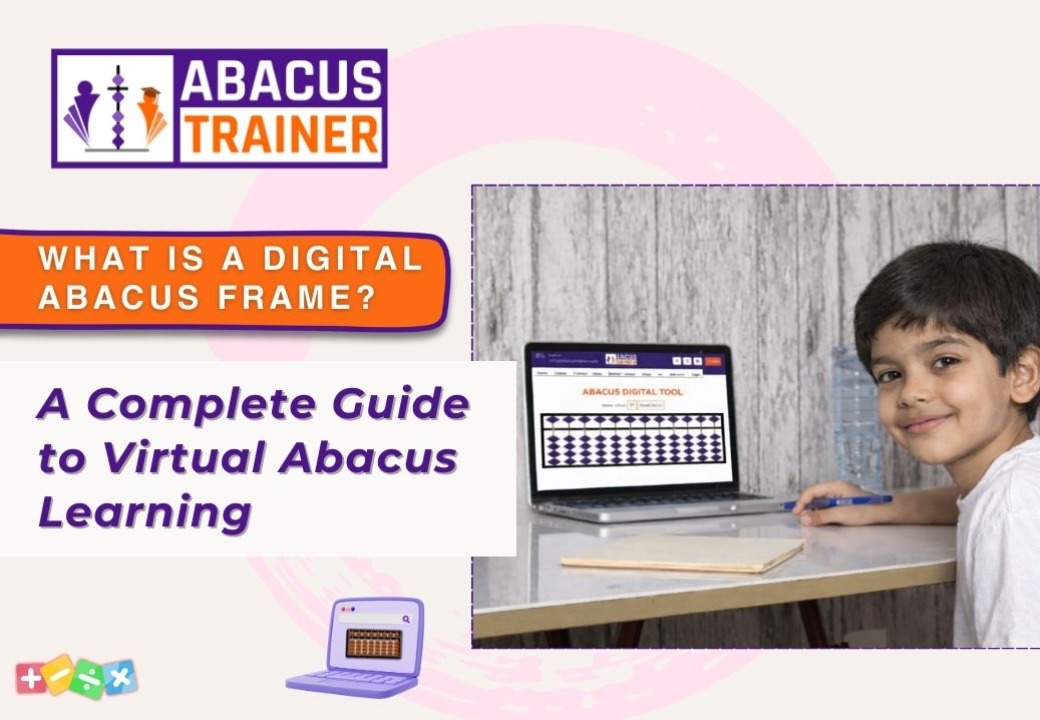
What Is a Digital Abacus Frame? A Complete Guide to Virtual Abacus Learning
Learning maths is evolving quickly. While the traditional abacus has helped children for centuries, it now needs to adapt to the digital world. This is where the digital abacus frame comes in. It combines the power of traditional abacus learning with modern technology, making it more engaging, flexible, and fun for kids. Today, parents, teachers, and schools are using digital abacus tools to help students practice maths anytime and anywhere. In this guide, you will learn what a digital abacus frame is, how it works, and why virtual abacus learning is becoming popular among students.
Understanding the Digital Abacus Frame
A digital abacus frame is an online or computer-based version of a traditional abacus. Instead of physical beads, students move virtual beads using a mouse, touchscreen, or keyboard. It follows the same concept but makes learning easier and more engaging.
A digital abacus tool displays numbers and calculations just like a physical abacus. It helps students learn place value, addition, subtraction, multiplication, and division. The key advantage is convenience, as students can practice on a computer, tablet, or mobile device without carrying any physical tool.
This modern version of the abacus makes learning more flexible while maintaining strong educational value.
What Is a Virtual Abacus?
A virtual abacus is the digital version of a traditional abacus used for online learning. It allows students to perform calculations on screen while building a strong understanding of numbers and improving mental maths skills.
Unlike a calculator that gives instant answers, a virtual abacus requires students to move beads and think through each step. This process improves focus, memory, and logical thinking.
The virtual abacus is particularly useful for online learning, home practice and schools that would like to offer abacus training but not invest in physical set-up.
How Digital Abacus Learning Works
The learning process of a digital abacus frame is similar to traditional abacus training.
- Initially the learners have to operate the digital beads themselves.
- They learn basic operations like addition and subtraction.
- Slowly, they work through more challenging calculations.
- Over time, students are able to ‘picture’ the abacus in their mind.
Abacus practice The ultimate goal of abacus training is to make this transition from physical or digital to mental calculation. The journey is made easier by the electronic abacus which provides both confidence-boosting, clear visuals and repeated practice.
Advantages of a Digital Abacus Frame
One of the biggest advantages of a digital abacus tool is easy access. Students can practice at home, school, or anywhere with an internet connection.
A digital abacus frame also adds some fun to learning. Children are more attracted and motivated by interactive screens than static tools. Smooth animations and clean layouts make learning more engaging and enjoyable for children.
Another major benefit is consistency. With a virtual abacus, children can practice daily without any gap. You will calculate faster with practice and you will be more accurate.
Digital Abacus vs Calculator
A lot of parents are curious about why kids should use a digital abacus when there is probably a calculator really handy. What’s different is the way a brain learns. A calculator provides instant answers but does not help children understand the problem-solving process. A digital abacus frame, in contrast, prompts step-by-step thinking. Students learn why numbers work, as opposed to just memorising answers.
This is why abacus digital learning is preferred for early & middle learning stages, where brain development and number sense are very important.
Digital Abacus Frames are Popular with Schools Here is Why
Digital Tools With the growing use of digital tools in support of blended and online learning, more and more schools are jumping on the technology bandwagon. It is clear that a virtual abacus slot into this just as described. It is applicable to classrooms, computer labs, or online sessions without any additional hardware.
Educators can live-show calculations, set practice work and follow students progress, without breaking a sweat. In addition, all our test banks are in digital format which makes teaching the same from class to class and location to location.
For schools wanting to focus on raising maths confidence and attainment, the digital abacus frame could provide a practical, sustainable solution at scale.
Who Can Use a Digital Abacus?
The digital abacus is appropriate for a variety of learners. Even very young children can begin with a few numbers. It can be also used by school students to reinforce maths basics. Better focus and ability to calculate mentally are even useful to teens and adults.
Because it’s online, learners of all ages can practise in their own time without pressure.
The Future of Learning to Count on the Abacus Is an App
There’s no change to the basic principles of abacus learning, only to how it is applied. This digital abacus frame will take traditional maths education into the digital age and not lose any of its classroom benefits.
With the increase in online learning, home schooling and virtual classrooms, it’s become an indispensable tool for children, parents and schools. It encourages mental math, faster computation and better comprehension. If you want to learn abacus in a more intelligent way, the electronic abacus is an optimum of tradition and technology.